When Everything Was Manual
Hard to believe, but Amazon once tracked warehouse inventory on spreadsheets. Google’s first employees submitted timesheets on paper. Every company you admire today started with someone manually entering data, chasing down approvals, and fixing errors by hand.
Before software took over, business ran on paperwork. Managers reconciled timesheets manually. Accountants entered transactions one by one. Meeting notes lived in notebooks, and project updates required chasing people down the hallway.
The cost was invisible but constant—hours lost, errors repeated, decisions delayed. Nobody questioned it because everyone did it the same way.
For decades, this was simply the price of doing business. If you wanted to grow, you hired more people to handle more paperwork.
How AI Reshaped Business
In November 2022, OpenAI released ChatGPT. Five days later, one million people were using it. Two months later, 100 million. Nothing had ever grown that fast.
The reaction was immediate. Microsoft wrote a check for billions. Google called emergency meetings. Salesforce, Oracle, Amazon, everyone rushed to announce something, anything, with AI in the name.
Previous tech waves required developers, IT teams, months of implementation. ChatGPT required a browser. A receptionist could use it. A lawyer could use it. A founder running a company from a coffee shop could use it.
Tasks that took hours (drafting reports, summarizing documents, answering complex questions) suddenly took minutes. And once people saw that, there was no going back. Even everyday business functions like time tracking and project management started getting rebuilt around AI.
Who Moved First
Curious which companies jumped on AI fastest?
No surprise, tech led the way. Microsoft integrated ChatGPT across Word, Excel, Outlook, and Teams. Google merged its AI research divisions overnight. Notion, Zapier, and Replit shipped AI features within weeks.
But here’s the interesting part.
Banks followed right behind. Law firms, the same ones that ignored email for years, started using AI to draft contracts faster than junior associates ever could. Healthcare systems used it to read scans. Retailers used it to predict what you’d buy next.
Industries that resisted technology for decades adopted AI in months. Nobody wanted to be left behind.
What AI Does in Business Today
AI runs operations. It does the work that used to fill entire job descriptions.
It tracks time automatically. No more manual timesheets or chasing employees for hours. It joins meetings, transcribes everything, and sends summaries before anyone opens their notebook. It handles project management, assigning tasks, flagging delays, generating status reports without anyone asking.
It handles accounting. Invoices go out on time. Expenses categorize themselves. Cash flow updates in real time.
Writing, coding, customer support, hiring, legal review: AI found its way into all of it.
The tools that power modern business look nothing like they did two years ago. Here are five leading the way.
5 Tools Leading the Way
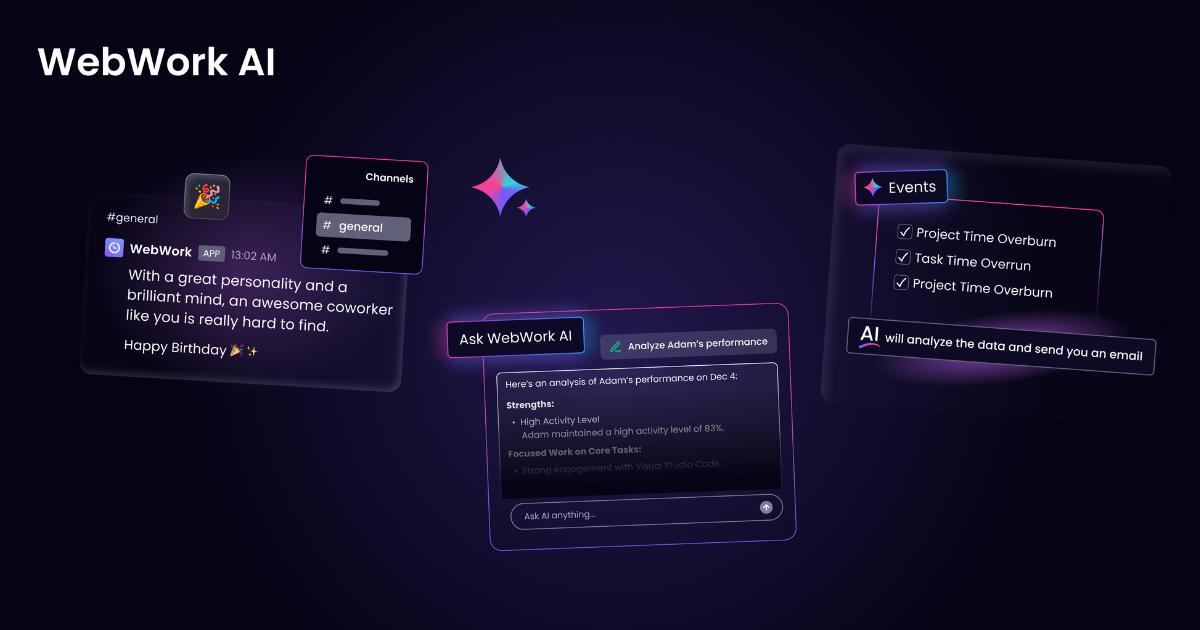
1. WebWork
Tracks time automatically while WebWork AI answers questions in plain language, creates tasks, and runs standups on its own. Burnout detection flags at-risk employees before managers notice. Time Clock Kiosk handles attendance for shared-device teams. Featured in Forbes’ Best Employee Monitoring Tools 2025 and the Capterra Shortlist 2025/2026 for Time Tracking and Attendance.
2. Fireflies.ai
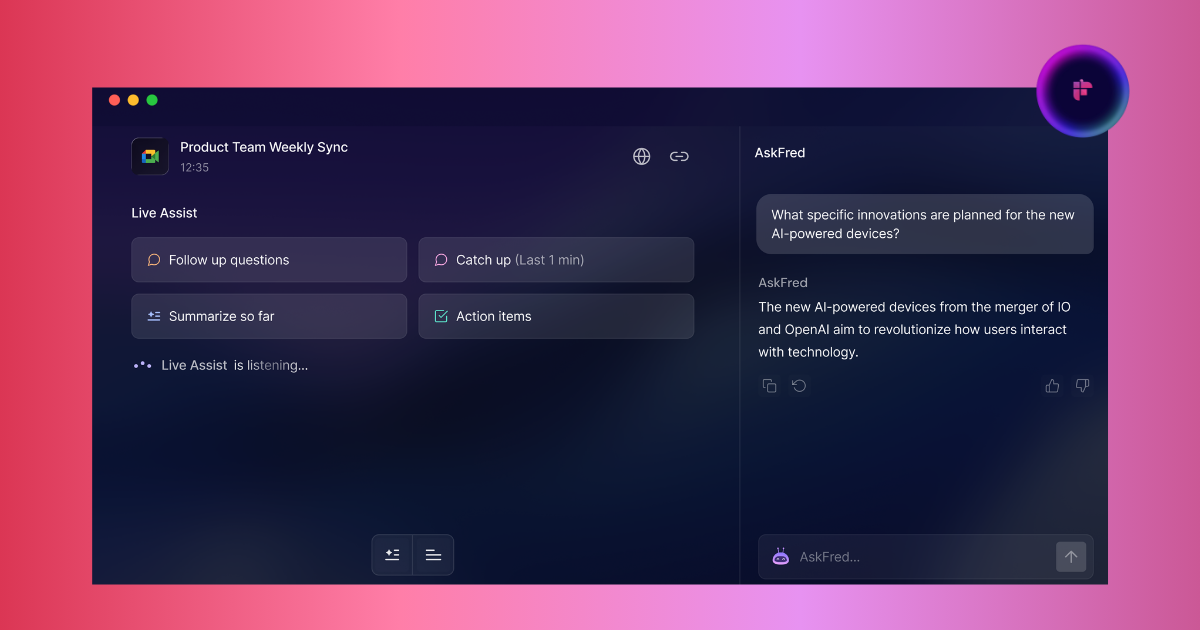
Joins video calls to record and transcribe conversations across Zoom, Google Meet, and Microsoft Teams. Delivers AI-generated summaries and extracted action items. The “AskFred” feature lets teams ask natural language questions about past meetings and get answers with source links. Winner of two G2 2025 Best Software Awards — Top 100 for Highest Customer Satisfaction and Top 50 for Best Collaboration & Productivity Products.
3. Notion AI
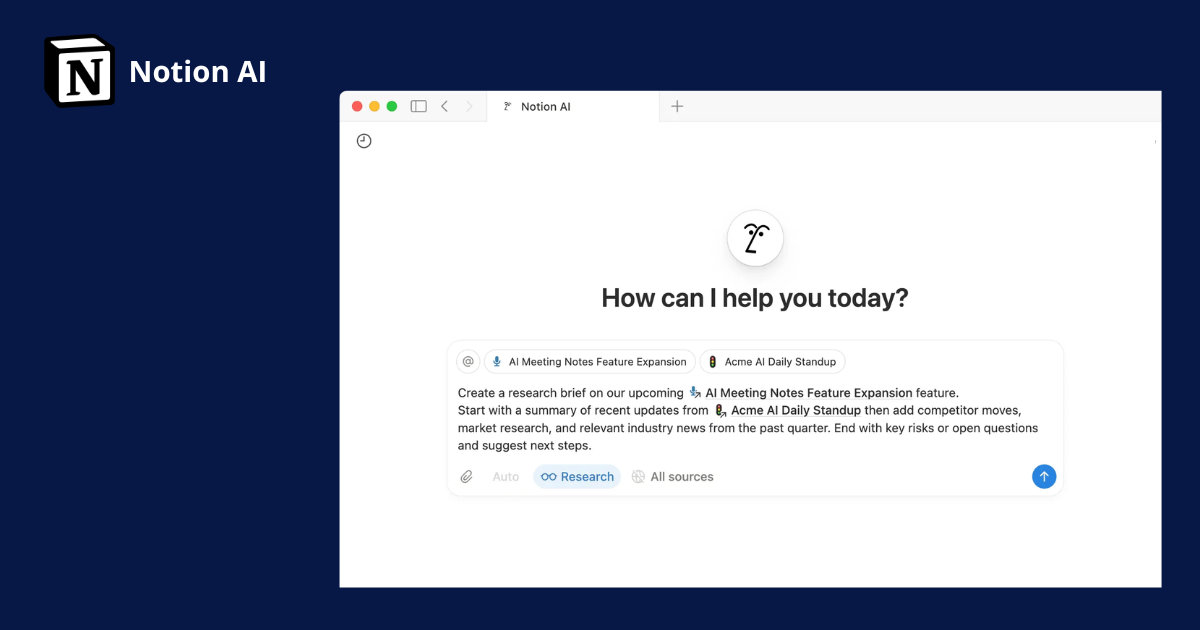
Transforms a flexible workspace into an active knowledge system. Drafts content, summarizes pages, answers questions from your workspace. AI Agents execute multi-step workflows autonomously—building project plans, compiling research, updating records across hundreds of pages. G2 Grid Leader and #1 in 5 categories. Recognized in G2’s 2026 Best Software Awards.
4. ClickUp
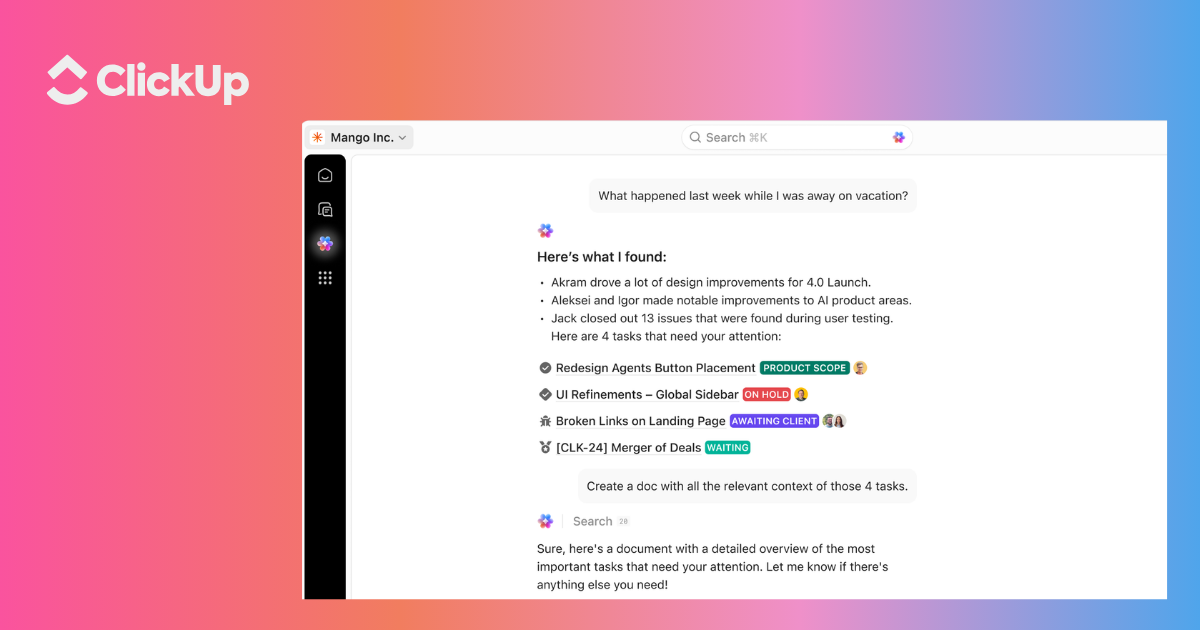
Consolidates tasks, docs, chat, and goals with “ClickUp Brain” responding to natural language queries. Ask “What’s blocking the mobile redesign?” and get answers from tasks, comments, and connected apps. Includes AI agents for sprint planning, standup facilitation, and project documentation. Featured in G2 Winter 2026 reports, more than any other product on the platform, with Top 3 placement in 526 of them.
5. QuickBooks AI
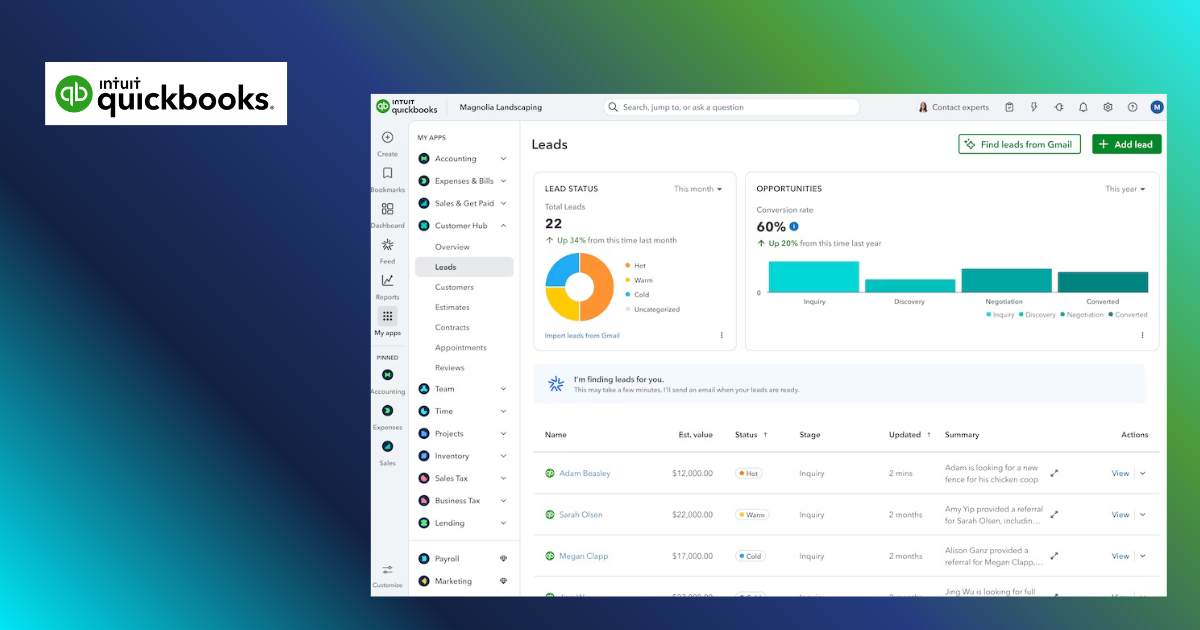
AI agents handle accounting functions autonomously. If an invoice goes unpaid, one agent identifies the issue, another sends a follow-up, a third updates cash flow projections. AI-powered reconciliation compares bank statements to records and suggests corrections. Named an Accounting Leader in G2’s Summer 2025 Grid Report and a TrustRadius Top Rated Accounting Software winner. Trusted by over 100,000 QuickBooks Online Advanced customers.
What Comes Next
The pattern is clear: AI handles the repetitive work. Humans handle judgment, relationships, and strategy.
AI agents are already moving from assisting to acting. Emails get drafted and sent automatically. Overdue invoices trigger their own follow-ups. Tasks move from suggestion to completion without anyone stepping in.
Platforms like WebWork are already showing what this looks like in practice—AI that detects burnout before it happens, flags workload imbalances automatically, and runs standups without anyone scheduling them. Time tracking that thinks for itself. Workforce management that manages itself.
The companies that win won’t be the ones with the most employees. They’ll be the ones that figured out how to let AI handle the work nobody wanted to do, so their people could focus on the work that actually matters.