
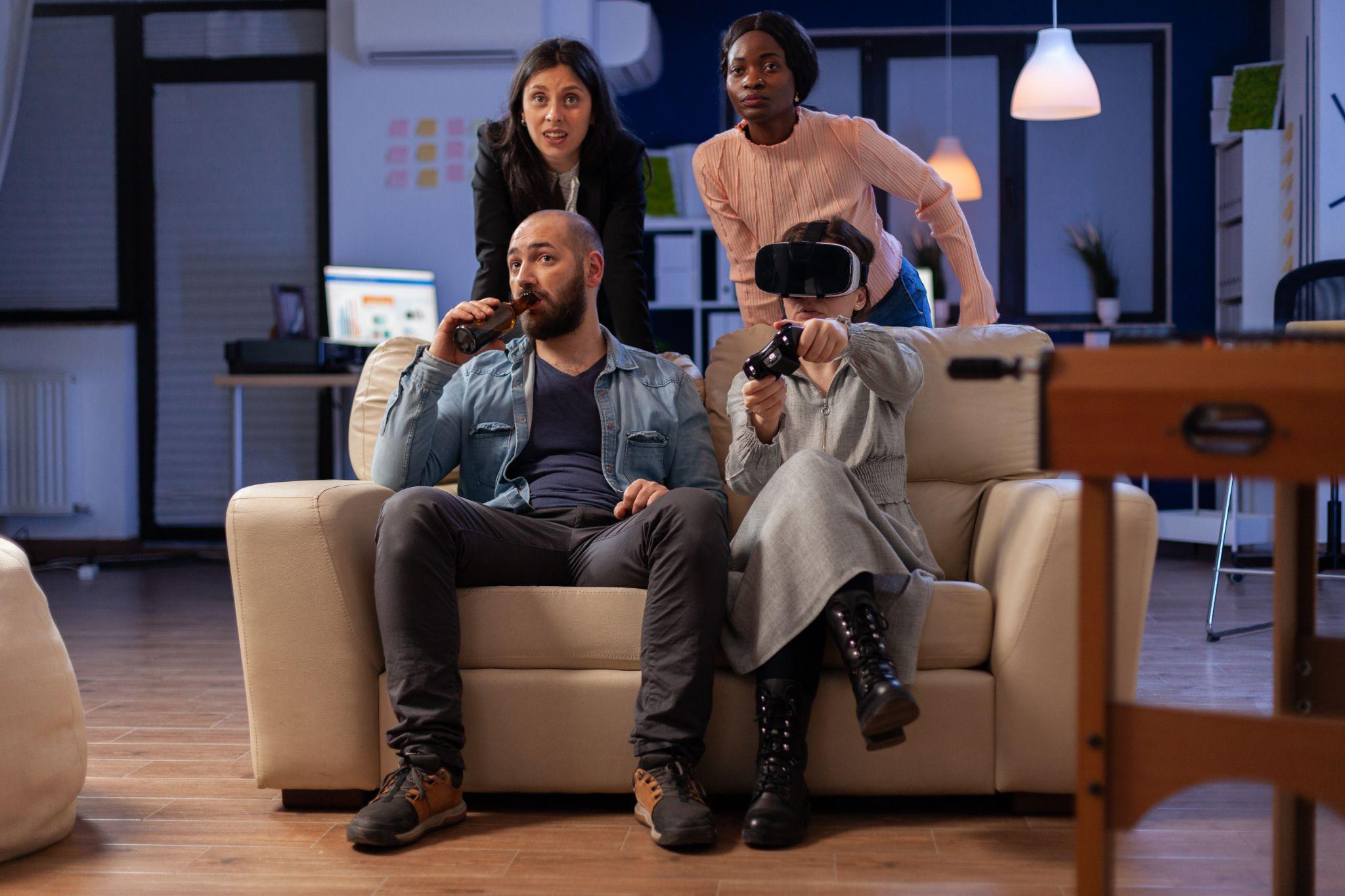
It’s surprising how product discussions often return to games, even in companies that have nothing to do with entertainment. Not because games are trendy, but because they expose weak spots faster than most tools. When something feels off, players just leave. Sometimes within minutes and often without saying why.
Teams started looking at games less as a separate category and more as a reference point for how real users behave across different regions. These observations helped teams understand patterns in user engagement.
Global pressure forced a rethink
As global gaming markets grew, priorities started to shift. Asia-Pacific alone accounts for a massive portion of global gaming revenue, and that’s been consistent for years. For US companies, making one thing clear: designing for one audience first no longer worked.
Products built that way often needed heavy rework later. Not just translation, but structural changes. Navigation flows, feature visibility, and even the way instructions were framed required changes, adding time, cost, and occasionally friction between teams. Games, on the other hand, were already factoring in these differences much earlier. That gap became hard to ignore.
Translation wasn’t enough, and the data showed it
There was a stretch where teams leaned heavily on translation as the main solution. They convert the text, double-check accuracy, and launch the game. On paper, it seemed reasonable. But user behavior told a different story. Engagement dropped in certain regions without a clear technical reason. Some features went untouched. Others were used in ways that didn’t match their intent. Game teams had already been dealing with this. Their focus had shifted toward the full experience of how instructions land, how pacing affects attention, and how small cues guide behavior. That’s when professional video game localization became essential for software teams.
Borrowing patterns instead of reinventing them
Software teams didn’t try to replicate game design outright. That wouldn’t have made sense. What they did take were patterns that already worked globally. Onboarding is one example. Games overwhelm users with information upfront. They introduce mechanics step by step, often without making it feel like instruction. Software products began shifting in that direction: less text upfront, more guided interaction. Iteration cycles changed too. Instead of waiting for large updates, teams started working on smaller adjustments, especially when avid gamers behaved differently across regions.
Early decisions started carrying more weight than expected.
One thing became clear after a few cycles: fixing things late doesn’t always work. If a feature doesn’t align with user expectations in a particular region, changing a few words won’t fix the underlying issue. So teams moved earlier in the process. This is usually the point where the idea to localize your software shifts from a final step and becomes part of how things are built from the start. Layouts were tested with longer strings. Content avoided region-specific pairing where possible. UI elements were checked in multiple languages before anything went live. That shift made a difference. It reduced back-and-forth later and made timelines easier to manage.
Small details kept causing bigger issues
Some of the more stubborn problems arose from minor details that looked harmless at first. Icon choices, spacing, and the tone of short system messages—these small elements shaped how users moved through the product. Games had long treated these as critical because players rely on quick recognition and response.
Software teams began paying closer attention here. Not by overhauling everything, but by testing small variations and watching how users reacted. In some cases, a minor adjustment changed how a feature was used entirely.
Less guessing, more tracking
Decision-making started to change quietly. Instead of relying on general assumptions about what users might prefer, teams started leaning on actual usage patterns.
Games had already set that standard. Player behavior is tracked in detail by observing specific interactions. That level of detail made it easier to see what wasn’t working. Software teams began adopting similar tracking. Session length, interaction points, and drop-offs were compared across regions rather than viewed in isolation. Sometimes the differences were subtle. Other times, they were hard to miss.
Updates became part of the workflow, not an afterthought
Another shift showed up in how products evolved after launch. Games are expected to change. Updates are frequent, and players are used to it.
Software followed a similar path. Instead of treating launch as a final step, teams planned for continuous updates. Feedback from different regions was reviewed regularly, and adjustments were made in smaller increments. This took some pressure off getting everything perfect the first time. It also allowed teams to respond to region-specific issues without affecting the entire product.
How users are guided, how feedback is handled, and how adjustments are made over time are the patterns that were refined in gaming environments. US companies didn’t switch all at once. They make gradual changes that work for them.
Wrapping Up
For a lot of US software companies, things changed when they stopped assuming one version of a product would work everywhere. Users in different regions rarely complain—they simply stop using products that don’t feel intuitive. That’s what made teams look closer at how easily users actually understand what they’re building.
Instead of fixing issues later, more attention now goes into getting things right from the start, so the experience feels natural no matter who’s using it. Games helped reinforce that thinking. They showed how quickly people lose interest when something feels confusing, even slightly.