Unplanned machinery failures cost industrial operations millions in downtime, repair expenses, and lost production every year. Effective condition monitoring stands as the first line of defense against these costly disruptions, enabling maintenance teams to detect developing problems before they escalate into catastrophic breakdowns. Among the most trusted tools in this domain is the 3300 XL Proximity Transducer System by Bently Nevada, a solution that has become integral to vibration monitoring and shaft position measurement across turbines, compressors, pumps, and other rotating equipment. However, engineers responsible for maintaining these critical monitoring systems often face a significant challenge: sourcing authentic, reliable replacement parts that ensure continued measurement accuracy and system integrity. Whether dealing with aging installations or expanding monitoring coverage, finding the right components from trustworthy suppliers can be a complex process. This article explores the capabilities and architecture of the 3300 XL system, breaks down its essential components, and provides actionable guidance for procuring genuine parts that keep your machinery protection systems performing at their best.
An Overview of the 3300 XL Proximity Transducer System
The 3300 XL Proximity Transducer System, manufactured by Bently Nevada (a Baker Hughes business), is a non-contacting eddy current measurement system designed to continuously monitor the mechanical condition of rotating machinery. At its core, the system uses the principle of electromagnetic induction to detect changes in the distance between a probe tip and a conductive target surface, typically a rotating shaft. This enables precise, real-time measurement of radial vibration, axial position, shaft eccentricity, and rotational speed without any physical contact that could introduce wear or measurement artifacts.
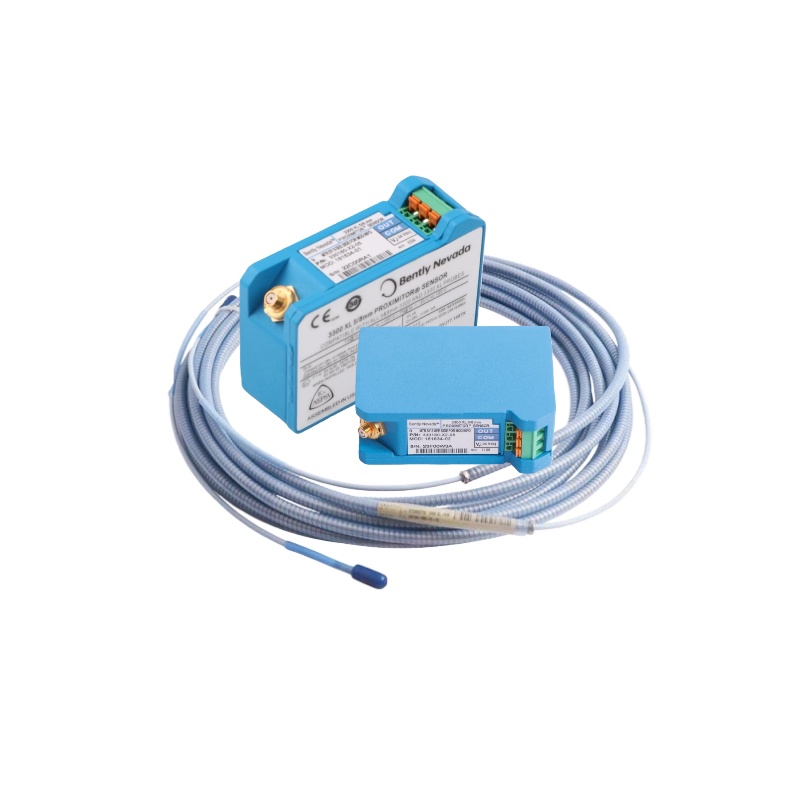

The system architecture centers on three primary elements working in concert: the proximity probe itself, an extension cable, and a proximitor (signal conditioning module). The probe generates a high-frequency electromagnetic field at its tip. When a conductive target moves within this field, it alters the electrical characteristics of the probe circuit, and the proximitor converts these changes into a proportional voltage output. This output feeds directly into plant monitoring systems, distributed control systems, or dedicated machinery protection platforms such as Bently Nevada’s own 3500 series.
Within broader condition monitoring frameworks, the 3300 XL system serves as the sensing foundation upon which diagnostic decisions are built. It provides the raw measurement data that vibration analysts and automated systems use to identify imbalance, misalignment, bearing degradation, oil whirl, and other mechanical faults. Because the system operates continuously rather than on a periodic walk-around basis, it captures transient events and gradual trend changes that might otherwise go unnoticed. This makes it especially valuable on critical machinery trains in oil and gas, power generation, petrochemical, and mining operations where uninterrupted performance is essential to both safety and profitability.
Core Features and Advantages of the 3300 XL System for Engineers
Engineers tasked with protecting critical rotating assets need monitoring systems that deliver consistent, trustworthy data under demanding conditions. The 3300 XL system has earned its reputation precisely because it addresses these requirements through a combination of measurement excellence and rugged construction that translates directly into better diagnostic outcomes and fewer false alarms.
Precision Measurement and Sensitivity
The 3300 XL system’s eddy current technology enables detection of shaft displacement changes on the order of microns, giving vibration analysts the resolution needed to identify developing faults well before they manifest as audible noise or elevated temperatures. This sensitivity is critical when distinguishing between normal operational variations and early-stage bearing wear, rotor cracks, or coupling degradation. The system maintains a highly linear voltage-to-displacement relationship across its calibrated measurement range, which means engineers can trust trending data over weeks and months without worrying about sensor drift distorting their baseline comparisons. This linearity also simplifies integration with orbit plot analysis and spectrum diagnostics, where accurate amplitude data directly influences fault classification. For machinery operating at high speeds or under variable loads, the system’s wide frequency response captures both synchronous and subsynchronous vibration components that are essential for detecting phenomena like oil whirl or shaft instability.
Durability in Harsh Industrial Environments
Industrial installations rarely offer gentle operating conditions, and proximity probes must function reliably despite exposure to extreme temperatures, corrosive atmospheres, steam, oil mist, and mechanical vibration transmitted through mounting structures. The 3300 XL probes are engineered with robust housing materials and hermetically sealed construction that resist degradation from these environmental stressors. This durability means fewer unplanned probe replacements and more consistent long-term data quality. The system’s tolerance for wide temperature ranges makes it suitable for applications ranging from cryogenic compressors to high-temperature gas turbines. Additionally, the cable and connector designs resist moisture ingress and electromagnetic interference from nearby power electronics, ensuring signal integrity even in electrically noisy environments such as those found near variable frequency drives or high-voltage switchgear. For engineers, this translates to reduced maintenance burden on the monitoring infrastructure itself, allowing them to focus analytical attention on the machinery rather than troubleshooting sensor issues.
Understanding Essential 3300 XL Proximity Transducer System Parts
Keeping a 3300 XL system operating at peak performance requires a clear understanding of its individual components, how they interact, and when they need attention. Each element in the measurement chain plays a distinct role, and degradation in any single part can compromise the accuracy of the entire system. Engineers who familiarize themselves with these components are better positioned to diagnose monitoring issues quickly and maintain uninterrupted machinery protection.
Key Components: Probes, Transducers, and Accessories
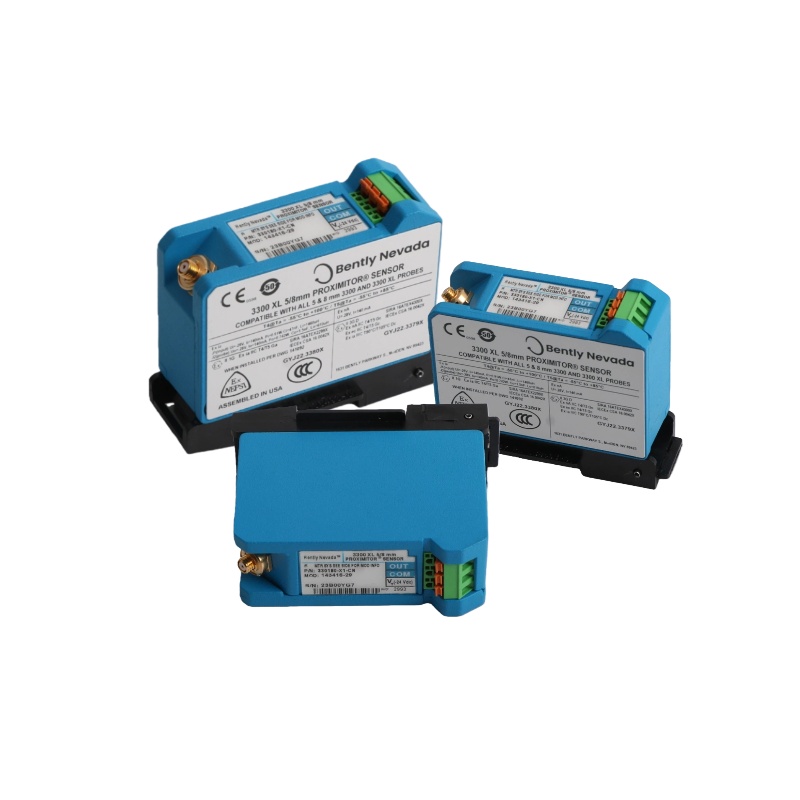
The proximity probe is the frontline sensing element, housed in a threaded body that mounts directly into the machine casing within a few millimeters of the rotating shaft. It contains a coil that generates the electromagnetic field responsible for detecting target displacement. Probes come in various tip diameters and thread configurations to accommodate different machine designs and mounting constraints. The extension cable connects the probe to the proximitor, carrying the high-frequency signal over distances that can range from a few feet to several meters depending on the installation layout. Cable length is not arbitrary—it must match the specific system calibration, as the total cable length (probe cable plus extension cable) directly affects measurement accuracy. The proximitor, or signal conditioner, is the electronics module that powers the probe, processes the returning signal, and outputs a calibrated voltage proportional to the gap between the probe tip and the target surface. Supporting accessories include mounting hardware such as probe holders and adaptors, target material verification tools, and calibration fixtures used during installation and periodic system checks. Each of these accessories ensures that the probe is positioned correctly and that the system’s output corresponds faithfully to actual shaft movement.
Common Replacement Parts and Maintenance Scenarios
Probes themselves are the most frequently replaced component because they sit closest to the harsh operating environment inside machine casings. Physical damage from shaft contact during a machinery event, erosion from particulate-laden process gases, or gradual insulation breakdown from prolonged heat exposure can all necessitate probe replacement. Extension cables are the next most common replacement item, as they can suffer from connector corrosion, jacket degradation in chemically aggressive atmospheres, or mechanical damage during adjacent maintenance activities. Proximitors, while generally more protected inside control cabinets, occasionally fail due to power supply issues, component aging, or exposure to moisture that breaches enclosure seals. Engineers should also watch for degradation at cable connectors, where intermittent contact resistance can introduce noise that mimics vibration signatures and leads to false diagnostic conclusions. Establishing a scheduled inspection routine that includes gap voltage verification, cable continuity checks, and visual inspection of probe tips helps maintenance teams identify components approaching end-of-life before they produce unreliable data or trigger spurious machinery trips.
How to Source Reliable 3300 XL Proximity Probe Parts: A Step-by-Step Guide
Securing genuine replacement parts for the 3300 XL system is not simply a procurement task—it directly impacts the reliability of your machinery protection program. A counterfeit or incompatible component introduced into the measurement chain can produce subtle calibration errors that corrupt trending data, trigger false alarms, or worse, fail to detect a genuine mechanical fault. Engineers need a systematic approach to sourcing that prioritizes authenticity, compatibility, and supplier accountability.
Identifying Authentic Bently Nevada Parts
Start by cross-referencing the full part number from your existing installation documentation or the label on the component being replaced. Bently Nevada uses specific nomenclature that encodes probe tip diameter, cable length, thread type, and calibration target material—any deviation indicates a mismatch. Genuine parts carry manufacturer-applied serial numbers and are accompanied by calibration certificates traceable to factory standards. Inspect packaging for official Baker Hughes or Bently Nevada branding, holographic security labels, and documentation that includes calibration data sheets with specific sensitivity values for that individual unit. Be wary of parts sold without calibration records, as legitimate proximitors and probes are always shipped with this documentation. When in doubt, you can verify a serial number directly through Bently Nevada’s customer support channels. Physical inspection matters too: authentic probes exhibit consistent machining quality on the threaded housing, uniform potting compound at the cable exit, and connectors that mate smoothly without excessive play.
Steps to Find and Vet Suppliers for Spare Parts
Begin your search with Bently Nevada’s authorized distributor network, which is published on Baker Hughes’ official website. Authorized distributors maintain direct supply chain traceability and carry factory warranty coverage that protects your investment. If lead times from authorized channels are prohibitive, evaluate independent suppliers by requesting proof of their sourcing chain—reputable dealers such as Apter Power will disclose whether parts are new, surplus, or refurbished and provide original manufacturer documentation. Check supplier credentials by reviewing their history with other industrial clients, looking for ISO certifications related to quality management, and confirming they offer technical support for compatibility questions. Before committing to a bulk order, purchase a single unit for bench testing: verify gap voltage output against known calibration standards, confirm cable impedance matches system requirements, and validate that the proximitor output integrates correctly with your monitoring platform. Establish a relationship with at least two vetted suppliers to avoid single-source dependency, and maintain an on-site inventory of critical spares—particularly probes and extension cables—so that replacement during a planned outage never depends on emergency shipping timelines. For a comprehensive selection of 3300 XL Proximity Transducer System parts, working with established suppliers ensures access to properly documented and calibrated components.
Protecting Critical Assets Through Quality Components and Trusted Supply Chains
The 3300 XL Proximity Transducer System remains a cornerstone of effective machinery condition monitoring, delivering the measurement precision and environmental resilience that engineers need to protect critical rotating assets. Its ability to detect micron-level shaft displacement changes continuously provides the early warning capability that separates planned maintenance interventions from costly emergency shutdowns. Understanding the system’s architecture—from probe tip to proximitor output—empowers maintenance teams to diagnose monitoring issues rapidly and maintain unbroken protection coverage across their most important equipment trains.
Equally important is the discipline of sourcing genuine, properly calibrated replacement components. Every element in the measurement chain must meet original specifications to preserve data integrity and avoid the dangerous gap between perceived machinery health and actual condition. By verifying part authenticity through serial numbers and calibration documentation, vetting suppliers against established quality criteria, and maintaining strategic spare parts inventories, engineers can ensure their monitoring infrastructure never becomes the weak link in their reliability program. Proactive investment in quality components and trusted supply relationships pays dividends far exceeding their cost—measured in avoided failures, extended equipment life, and the confidence that comes from knowing your protection systems will perform when it matters most.