

Here’s something strange about the app business.
You can build an app. You can launch it. You can watch your own downloads, your own revenue, your own reviews. You can know everything about your own performance.
But the app stores won’t tell you anything about anyone else.
How many downloads is your biggest competitor getting this month? No idea. Are they growing or shrinking? No clue. Did they just launch a new feature that’s getting users excited? You’ll find out whenever users start talking about it, which might be weeks later.
You’re running a business in the dark.

The Problem with Building Apps in 2026
The app market today is not what it was five years ago. Back then, you could build something decent, put it in the store, and people would find it. Discovery was easier. Competition was lighter.
Now there are millions of apps. Most never get found. The ones that succeed don’t just build good products. They understand the market.
They know what’s working. They know what’s trending. They know who’s winning and who’s losing. They watch their competitors like hawks. They move fast when something changes.
Without that visibility, you’re guessing. And guessing in a market this crowded is a recipe for failure.
What You’re Missing Right Now
Let’s imagine you have a fitness app. You check your numbers every day. Downloads are steady. Revenue is okay. You feel pretty good.
But what you don’t know could change everything.
You don’t know that a competitor just launched a new feature that users love. You’ll find out in three months when their downloads have doubled and yours have stayed flat.
You don’t know that a new app in your category is growing 30% month over month. By the time you notice, they’ll be too big to catch.
This isn’t hypothetical. This is what happens every day in the app stores.
What Changes When You Can See the Market
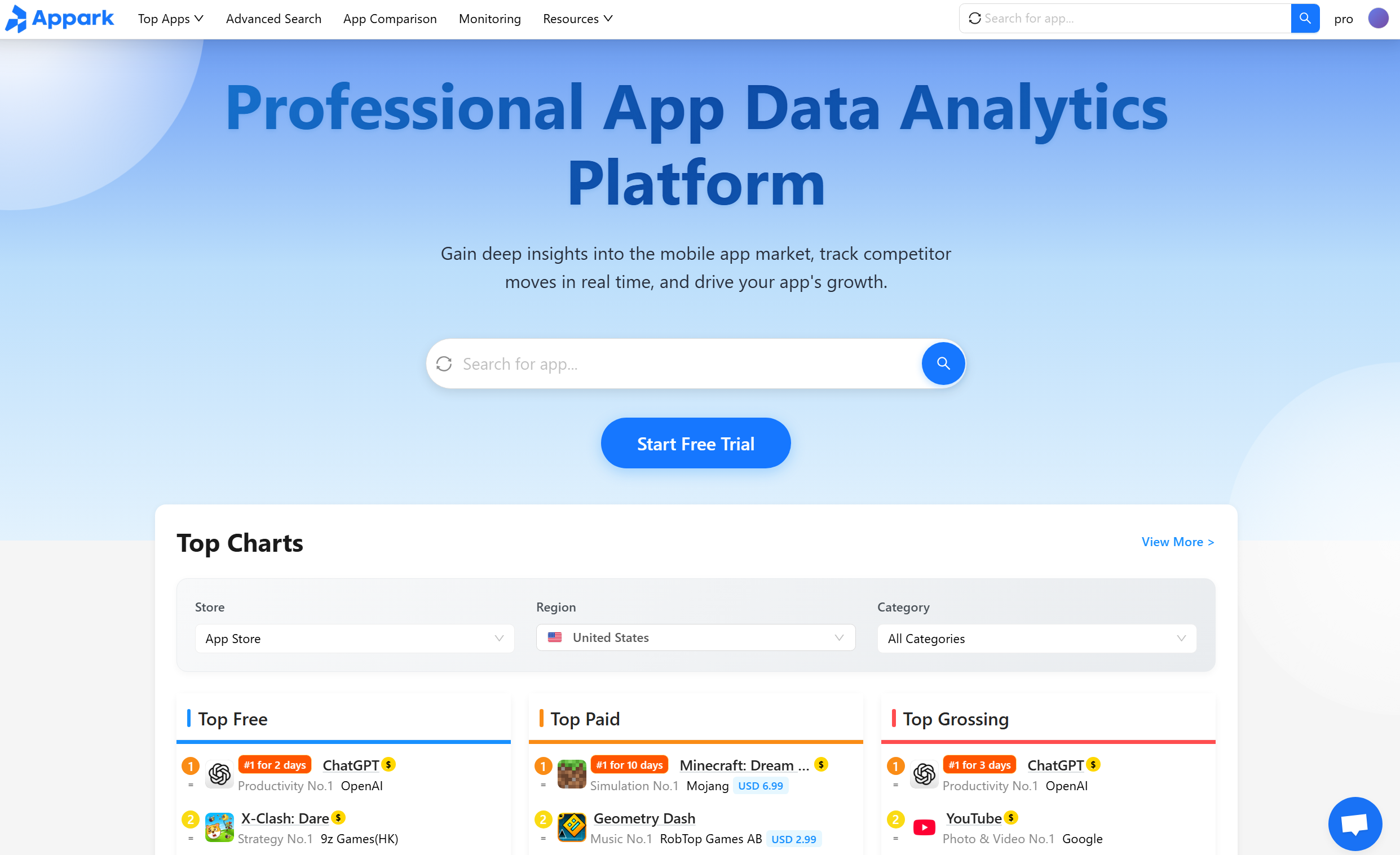
A good app competitor analysis tool changes everything.
Instead of guessing, you know. Instead of reacting late, you can plan early. Instead of hoping, you can execute.
For solo developers, this is huge. You don’t have a market research team. You don’t have a competitor intelligence department. You have you. A tool that shows you what’s happening lets you compete with companies ten times your size.
One developer put it this way: he used to spend three hours every day manually digging through app store data. Just trying to figure out what was happening. After he started using a real tool, he found a niche category he’d completely missed. Now that’s his main source of growth.
For marketing teams, it means you can see what’s working for others and adapt it. That campaign that drove downloads for a competitor? You can see it happen in real time. That pricing change that boosted their revenue? You’ll know within days.
The Specific Things You Can Learn
Let’s get specific about what becomes visible when you have the right tools.
Download estimates. You can see roughly how many downloads your competitors are getting. Not exact numbers, but close enough to know who’s winning. When those numbers spike, you know something happened. When they drop, you know something changed.
Revenue estimates. Downloads are one thing. Money is another. An app with a million downloads might be making nothing if it’s ad-supported. An app with 100,000 downloads might be making millions if it has good in-app purchases. Knowing the difference changes how you think about competitors.
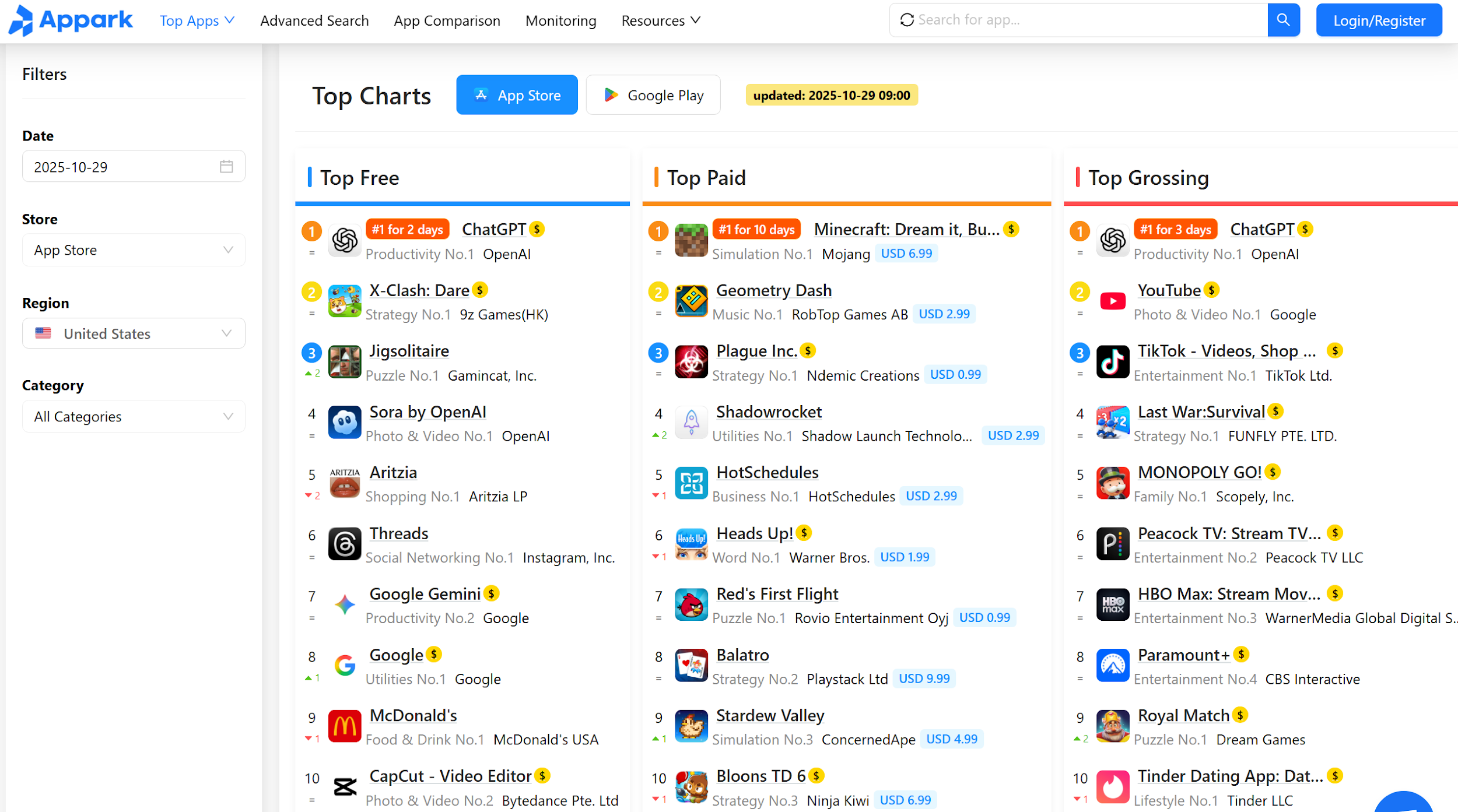
Ranking changes. When an app jumps twenty spots in a week, something drove that. A feature launch? A marketing push? A viral moment? You can investigate and learn from it.
Category trends. Sometimes a whole category takes off. Downloads across all fitness apps start climbing. If you’re watching, you see it early and can jump in. If you’re not, you miss the wave.
User sentiment. Reviews tell you what users actually think. Not just about your app, but about everyone’s. You can read what people are complaining about, what they’re asking for, what they love.
How Smart Filtering Finds Opportunities
Here’s where things get interesting.
You can filter the entire app store by almost anything.
Show me apps in the productivity category that launched in the last six months and have over 100,000 downloads. That’s how you find rising competitors before they’re obvious.
Show me apps with high revenue but low download numbers. That’s how you find apps that monetize well. Maybe you can learn from their strategy.
Show me apps with great reviews but poor rankings. That’s how you find apps that users love but that aren’t being marketed well. Maybe there’s an opportunity to build something better.
Show me apps tagged with “meditation” that have growing downloads and high ratings. That’s how you find hot categories before they peak.
A good app filtering tool turns the chaos of millions of apps into something manageable. It lets you find the signal in the noise.

Who Actually Uses This
The range of people who need this kind of data is wider than you’d think.
Indie developers use it to find gaps in the market. They spot categories that are underserved, features that users are begging for, competitors that are vulnerable.
Game studios use it to track what’s working in their genre. When a competitor’s update drives engagement, they study it. When a new game takes off, they analyze why.
Marketing teams use it to time their campaigns. They watch competitor launches and schedule their own promotions accordingly.
Investors use it to find promising apps before they blow up. If you can spot an app growing 30% month over month before anyone else notices, that’s valuable information.
Product managers use it to decide what to build. When the data shows a clear gap in the market, they fill it.
The Cost of Not Knowing
Here’s the thing people don’t always calculate: not knowing has a cost too.
Every day you spend building features that users don’t want is wasted time.
Every month you ignore a growing competitor is ground you’ll never get back.
Every year you miss a category trend is money left on the table.
The cost of a good analytics tool is nothing compared to the cost of flying blind.
No More Guessing
Building an app without market data is like driving with your eyes closed. You might move forward, but you have no idea where you’re going or what’s coming.
A good tool opens your eyes. It shows you the map, the traffic, the obstacles, the shortcuts. It lets you make decisions based on reality instead of hope.
For solo developers, for small teams, for anyone trying to grow in a crowded market, that visibility changes everything.
You stop guessing. You start knowing.