
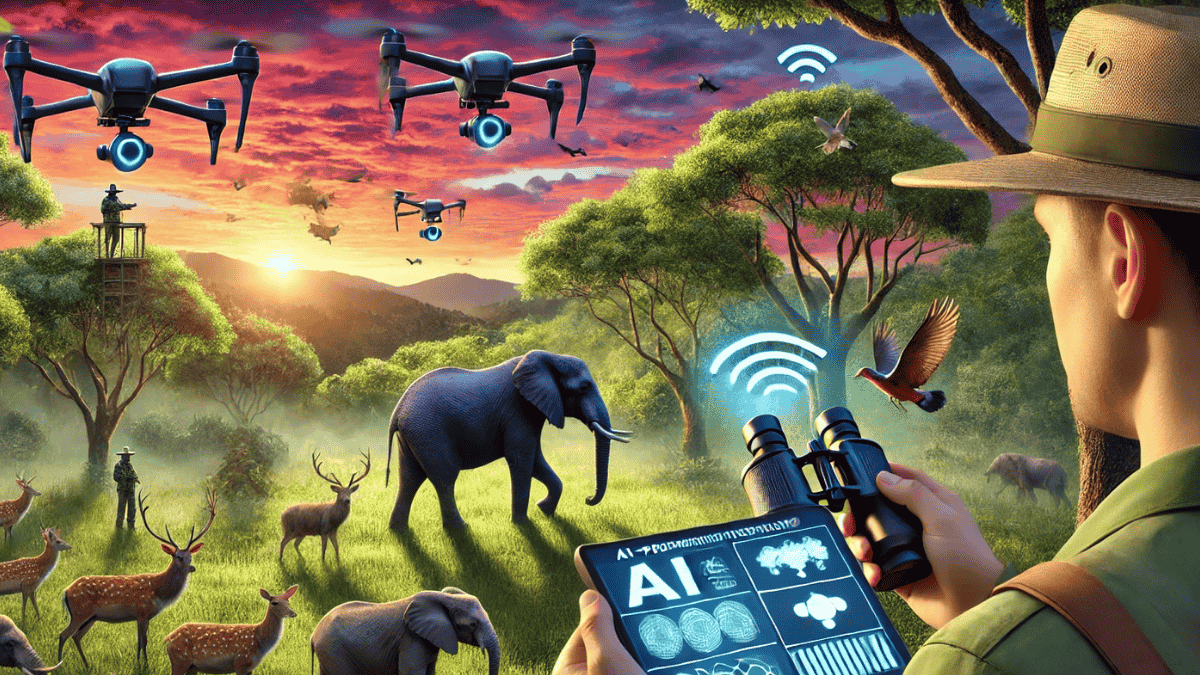
In recent years, artificial intelligence (AI) has emerged as a game-changer for wildlife conservation. As the world faces unprecedented biodiversity loss due to habitat destruction, climate change, and poaching, AI tools are providing innovative solutions to monitor, protect, and restore ecosystems. These technologies allow conservationists to automate tasks like species identification, habitat monitoring, and anti-poaching measures. This article explores the top 15 AI tools transforming wildlife conservation, offering detailed reviews and insights on their features, benefits, and drawbacks.
Importance of AI in Wildlife Conservation
- Improved Accuracy: AI enables faster and more accurate data analysis from sources like camera traps, drones, and satellite images. This helps identify species and track their movement patterns.
- Cost-Effectiveness: While the initial investment in AI tools is high, they can reduce long-term labor costs and optimize resources by automating manual tasks.
- Scalability: AI systems can cover large areas and multiple species, offering more comprehensive conservation efforts than human monitoring alone.
- 24/7 Monitoring: AI allows continuous monitoring, especially important in detecting poaching or habitat changes in real time.
- Enhanced Decision-Making: AI-driven predictive models aid in identifying critical areas for conservation, allowing for data-backed decision-making by AI Studio.
Top 15 AI Tools for Wildlife Conservation
1. Wildbook
Wildbook uses machine learning to identify and track individual animals based on photos and videos. It crowdsources data from researchers and citizen scientists, making it an excellent tool for collaborative conservation efforts.
Features:
- Image recognition for species identification.
- Tracks animals using natural markings.
- Integrates with social media for data collection.
- Real-time monitoring and reporting.
- Supports multiple species globally.
- Open-source platform.
- Highly accurate due to advanced algorithms.
Pros:
- Efficient for large-scale projects.
- Leverages crowd-sourced data.
Cons:
- Requires high-quality images for accuracy.
2. Conservation AI
Conservation AI helps protect endangered species by monitoring poaching activities and tracking animal movements through camera traps and drones equipped with AI-powered software.
Features:
- Detects poachers in real-time.
- Identifies animal species via camera traps.
- Integrates drone surveillance.
- Alerts authorities of suspicious activities.
- High-speed image processing.
- Capable of night surveillance using infrared.
- Easy integration with conservation strategies.
Pros:
- Enhances anti-poaching efforts.
- 24/7 monitoring.
Cons:
- Expensive initial setup.
3. EarthRanger
EarthRanger is a software platform that combines data from sensors, GPS trackers, and camera traps to provide real-time insights for wildlife monitoring and management.
Features:
- Real-time wildlife tracking.
- Integrates multiple data sources (sensors, trackers).
- Customizable dashboards for data visualization.
- Anti-poaching alerts.
- Supports endangered species recovery programs.
- Scalable for large landscapes.
- Cloud-based storage and analysis.
Pros:
- Comprehensive monitoring system.
- Real-time alert system for rapid response.
Cons:
- Requires significant data input and setup.
4. PAWS (Protection Assistant for Wildlife Security)
Developed by USC and the National Geographic Society, PAWS uses predictive modeling to help park rangers plan anti-poaching patrols efficiently.
Features:
- Predictive analytics for poaching hotspots.
- Uses data from past patrols and poaching incidents.
- Suggests optimal patrol routes.
- Reduces poaching activities.
- Machine learning-based predictions.
- Easily integrates with existing systems.
- Scalable for various conservation areas.
Pros:
- Prevents poaching through predictive methods.
- Reduces human resources needed for patrols.
Cons:
- Limited to areas with sufficient historical data.
5. Google AI – Wildlife Insights
Wildlife Insights uses Google AI’s deep learning capabilities to process millions of camera trap images, identifying species in real-time and creating databases for wildlife monitoring.
Features:
- AI-powered image recognition.
- Automatically classifies species.
- Processes millions of images per hour.
- Cloud-based for global accessibility.
- Reduces manual data entry.
- Contributes to a global wildlife database.
- Free and open-source platform.
Pros:
- Saves time and improves accuracy in species monitoring.
- Scalable for large projects.
Cons:
- Requires internet access for cloud processing.
6. Mbaza AI
Mbaza AI focuses on endangered species in Africa, using AI to analyze data from camera traps and monitor species like elephants, gorillas, and pangolins.
Features:
- Identifies endangered species.
- Analyzes camera trap data.
- Sends alerts for unusual patterns.
- Assists in anti-poaching efforts.
- Data-driven conservation decisions.
- Supports large wildlife reserves.
- Customizable for various ecosystems.
Pros:
- Specialized for African wildlife.
- Improves conservation management.
Cons:
- Limited to specific regions.
7. Wildlife Drones
Wildlife Drones uses AI-powered drones to monitor species movement, capture habitat images, and detect human activities in protected areas.
Features:
- AI-equipped drones for aerial monitoring.
- Captures high-resolution images and video.
- Tracks animal movement with GPS.
- Predicts human-wildlife conflict zones.
- Reduces reliance on human patrols.
- Automated data collection.
- Real-time analysis and alerts.
Pros:
- Ideal for large-scale, remote areas.
- Helps prevent poaching and habitat destruction.
Cons:
- Requires skilled operators for drone management.
8. Flora Incognita
Flora Incognita uses AI to identify plant species and map ecosystems, helping conservationists monitor changes in flora across landscapes.
Features:
- Identifies plant species via smartphone app.
- Uses image recognition and machine learning.
- Provides ecosystem insights.
- Tracks changes in biodiversity.
- Community-based data input.
- User-friendly interface.
- Available in multiple languages.
Pros:
- Useful for both experts and citizen scientists.
- Enhances botanical research.
Cons:
- Limited to flora species.
9. ZebraTrack
ZebraTrack uses AI to monitor endangered zebras in Africa by tracking their movements and behavior patterns to prevent population decline.
Features:
- Monitors zebra populations.
- Tracks movement patterns using GPS.
- AI analyzes data for conservation insights.
- Predicts migration routes.
- Alerts for poaching activity.
- Collects behavioral data.
- Integrates with wildlife protection agencies.
Pros:
- Specialized tool for zebra conservation.
- Provides real-time data on animal health.
Cons:
- Focused on specific species, limiting broader application.
10. Bioacoustic AI
Bioacoustic AI focuses on acoustic monitoring for conservation, using machine learning to analyze sounds from wildlife habitats. It is particularly effective in monitoring bird populations and marine life, including whales and dolphins.
Features:
- Analyzes bioacoustic data from various environments.
- Identifies species through their sounds.
- Detects abnormal environmental changes.
- Monitors bird migrations and marine mammal populations.
- Real-time data processing and alerts.
- Used for both terrestrial and marine environments.
- Helps track rare or elusive species.
Pros:
- Non-invasive method for monitoring species.
- Efficient for tracking migratory and marine animals.
Cons:
- Limited to species that produce distinctive sounds.
11. eBird by Cornell Lab of Ornithology
eBird is a citizen science tool powered by AI that helps track bird species worldwide. Birdwatchers contribute data, which is processed using AI algorithms to build extensive species distribution maps.
Features:
- AI processes global bird sightings.
- Crowd-sourced data collection from birdwatchers.
- Identifies species based on images and sound.
- Predicts species’ distribution and migration patterns.
- Large database accessible to conservationists.
- Available as a mobile app for easy use.
- Contributes to global bird conservation efforts.
Pros:
- High user engagement, contributing valuable data.
- Accessible to citizen scientists.
Cons:
- Data accuracy depends on user input.
12. Wildsense
Wildsense is an AI-based tool that helps detect illegal wildlife trafficking by analyzing online images and social media activity. This tool identifies species at risk and tracks the illegal trade of wildlife products.
Features:
- AI scans images and social media posts.
- Identifies illegal wildlife trade.
- Tracks endangered species’ parts (e.g., ivory).
- Sends alerts to authorities for intervention.
- Real-time detection and reporting.
- Helps enforcement agencies in investigations.
- Reduces illegal trafficking activities.
Pros:
- Enhances detection of illegal wildlife activities.
- Global reach via social media monitoring.
Cons:
- Relies on internet-based data, which can limit its scope in remote areas.
13. Animal Population AI by Microsoft
This tool is part of Microsoft’s AI for Earth program, focusing on population monitoring and biodiversity conservation. It integrates satellite data and AI algorithms to track and estimate wildlife populations over large areas.
Features:
- AI analyzes satellite imagery.
- Estimates species population density.
- Tracks animal migration and habitat changes.
- Uses predictive modeling for conservation planning.
- Offers global-scale biodiversity insights.
- Works with endangered species recovery programs.
- Provides data for climate change impact assessments.
Pros:
- Global scalability with satellite data.
- Provides accurate, large-scale population estimates.
Cons:
- Requires significant computational resources.
14. Droneseed
Droneseed is an AI-driven tool that helps in habitat restoration by using drones to plant trees and restore ecosystems. This tool is particularly useful in reforestation efforts and combating deforestation.
Features:
- Uses AI-powered drones for seed planting.
- Targets deforested or degraded land.
- Tracks reforestation progress in real time.
- Reduces costs compared to manual planting.
- Enables reforestation of difficult-to-reach areas.
- Monitors soil quality and habitat restoration.
- Optimizes reforestation strategies through data analysis.
Pros:
- Scalable for large-scale reforestation.
- Reduces labor costs and time for restoration.
Cons:
- Limited to specific ecosystems requiring tree planting.
15. Ecocognize
Ecocognize uses AI to map and monitor habitats, focusing on changes in biodiversity. It helps conservationists understand how species are distributed and how their habitats are affected by environmental changes.
Features:
- AI analyzes satellite and ground data.
- Maps species distribution and habitat health.
- Detects environmental changes over time.
- Helps predict species’ responses to climate change.
- Provides conservationists with data-backed insights.
- Monitors human impact on ecosystems.
- Supports conservation planning and restoration efforts.
Pros:
- Comprehensive habitat monitoring tool.
- Provides detailed environmental insights for long-term conservation.
Cons:
- Limited by the availability of satellite data in remote areas.
Conclusion
AI tools are transforming wildlife conservation by providing efficient, scalable, and accurate methods to monitor endangered species, prevent poaching, and gather vital ecological data. These Best AI Tools for Wildlife Conservation empower conservationists with data-driven insights, enhancing their ability to protect biodiversity and restore habitats. While challenges remain, such as financial barriers and the need for large datasets, the future of AI in conservation looks promising, offering solutions that are both innovative and necessary in the fight to protect our planet’s wildlife.